
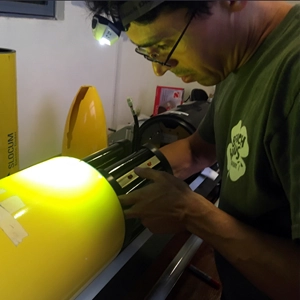
Glider and Marine Engineer
David Aragon
Research Interests
David Aragon serves as the primary engineer and pilot for RUCOOL’s Slocum underwater glider operations. For two decades David has been a lead in the field of underwater gliders, working closely with faculty to achieve research goals as well as industry to elevate the technology. In sharing this technology, David has been lead instructor for over 15 different week-long glider instruction courses targeting undergraduates, industry, and researchers. Assisting faculty and mentoring undergraduates in the production of numerous research projects and IEEE papers.
Prior to utilizing underwater robots for ocean research, David studied Electrical Engineering with a focus on computer engineering achieving a B.S. with honors from Rutgers University School of Engineering. During undergraduate focus was placed on robotics and computer vision utilizing C++ and MATLAB.
David has been placed in a variety of operational regimes and has been lead in spreading operational labs and knowledge to recipients such as University of Sao Paolo, Bermuda Institute of Marine Sciences, and several other research organizations. Successes such as the lead engineer for the first trans-Atlantic crossing of an ocean robot have become commonplace in the lab and in the field. Rutgers University Center for Ocean Observing Leadership’s success in the field of ocean robotics is a direct result of David’s commitment and experience.
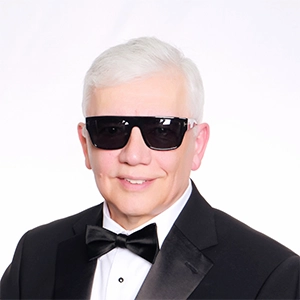
Research Programmer
Hernan Arango
Downloads:
Short Bio:
Hernan has been a Physical Oceanographer and Ocean Modeler at Rutgers University since September 1995. He is the lead developer of the Regional Ocean Modeling System (ROMS) and its ROMS-JEDI interface, part of the Joint Effort for Data Assimilation Integration (JEDI) Framework. This framework was created by colleagues at the Joint Center for Satellite Data Assimilation (JCSDA) in Boulder, Colorado. Over the years, ROMS has become more sophisticated and advanced, thanks to the contributions of various interdisciplinary scientific colleagues. ROMS is a community model in every sense, and its software is freely available at www.github.com/myroms. It has nearly 8,000 subscribed users worldwide, representing 120 countries.
I am fortunate to have a job that I truly love. I am curious, patient, and determined to develop and code complex physical and mathematical numerical models. I have also been privileged to work alongside extraordinary and talented colleagues I respect and admire. I strive to carry on the legacy of my early mentors, who inspired me during my graduate studies at Texas A&M University. From a young age, I have been drawn to both the ocean and computers, and it continues to amaze me that my passion for these interests remains as strong as ever.
In my free time, I enjoy astronomy, photography, traveling, admiring our planet, cooking, tasting fine wines, and reading a variety of genres
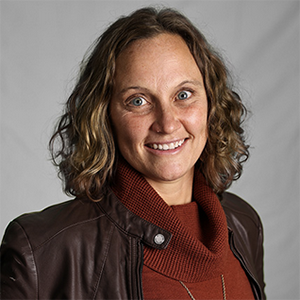
Executive Director – Megalopolitan Coastal Transformation Hub (MACH)
Lisa Auermuller
Downloads:
Bio:
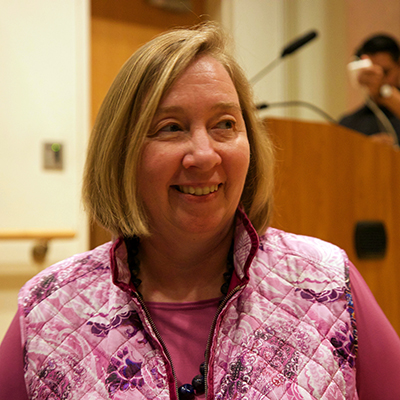
Lisa Auermuller serves as the Administrative Director of Rutgers’ NSF-funded Megalopolitan Coastal Transformation Hub (MACH). In this role, Lisa is the central manager of overall operations of the multi-institution effort. Lisa establishes mechanisms for collaborative sharing of findings among project partners, conducts regular outreach to promote coordination and collaboration with government agencies, and community leaders, and facilitates meaningful and routine collaboration and sharing among project partners.
Prior to 2023, Lisa was the Assistant Manager of the Jacques Cousteau National Estuarine Research Reserve (JC NERR) in Tuckerton, NJ where she had been employed since 2002. Lisa oversaw the day-to-day management of JC NERR’s Coastal Center as well as the Reserve’s education, outreach, communications, and Coastal Training Program.
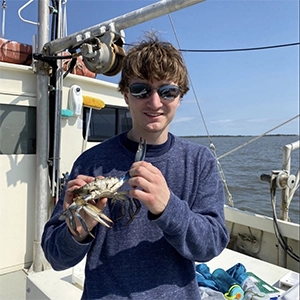
Senior Program Coordinator
Beatrice Birrer

MS Student | Glider Technician
Brian Buckingham
Short Bio:
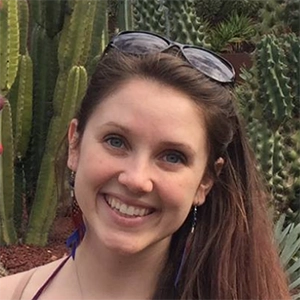
Brian Buckingham is a skilled Glider Technician with over 6 years of working with autonomous vehicles/performing oceanographic fieldwork. He received his B.S. from Texas A&M University and is currently working on his M.S. as part of the MOO program to advance his skillset. Brian assists in teaching glider camp, as well as prepares gliders and other oceanographic equipment, pilots gliders, and leads field expeditions for several projects. He is a GIS analyst and is advancing his programming skills analyzing mooring data through the MOO program. Furthermore, he is certified in hazardous materials (HAZMAT) shipping to assist in logistics of shipping research equipment for projects outside of the state of New Jersey.
Research Project Manager
Kaycee Coleman
Research Interests
Kaycee Coleman is a Research Project Manager at RUCOOL. She holds a M.S. in Oceanography and has over a decade of experience in scientific analyses, data management, project management and creating and maintaining relationships with various stakeholders. At RUCOOL, her goal is to support center members and ease their project and center management workloads. Coleman also leads the Department of Marine and Coastal Science’s Vessel Oversight Committee and has a wealth of knowledge in health, safety, and environmental permitting and regulations especially in regard to Offshore Wind Fisheries Monitoring and Oceanography Plans. Previously in her career, she has worked for the U.S. Fish and Wildlife Service managing the Northwest Atlantic Seabird Catalog, most notably on a project with NOAA and BOEM to inform offshore wind development. She has also worked for the Oyster Recovery Partnership where she led the development and training for Maryland’s electronic harvest reporting program for charter, crab, finfish, and oyster harvest as well as managed the dockside monitoring program to verify harvest.
For an up-to-date CV, please visit ResearchGate.

Program Coordinator - Megalopolitan Coastal Transformation Hub (MACH)
- JCNERR
Tara Collins
Technical Director: RUCOOL & MARACOOS
Michael Crowley
Downloads
Research Interests
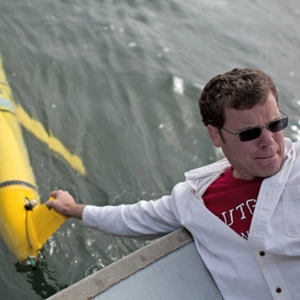
Michael is the Technical Director for the Rutgers University Center for Ocean Observing Leadership (RUCOOL) and the Mid-Atlantic Regional Association Coastal Ocean Observing System (MARACOOS). His RUCOOL work includes: management of operations the entire COOL Lab, ensuring continuous quality data delivery from RUCOOL, and heading up the external communications for the RUCOOL Team including oversight of our website.
Michael is also the Technical Director for the U.S. Integrated Ocean Observing System (IOOS) MARACOOS. Michael oversees all aspects of data collection within the Mid-Atlantic Bight (Cape Hatteras to Cape Cod). MARACOOS collects data primarily from satellites, HF-RADAR and underwater ocean gliders. Data from all the instrumentation is used to feed and test ocean forecast models, with the ultimate goal being to better enable scientists to forecast both the ocean and atmospheric weather for the greater good of the Mid-Atlantic region. All of the data and much more can be viewed at oceansmap.maracoos.org.
Short History
1991 B.A. Geography, Rutgers University, New Brunswick, New Jersey.
1993 M.S. Geography/Oceanography, Rutgers University, New Brunswick New Jersey.
Research Analyst
Collin Dobson
Short Bio:
Programmer & Data Analyst
Julia Engdahl
Short History
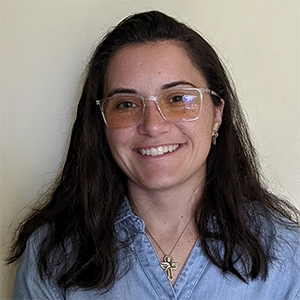
Julia Engdahl is a Programmer and Data Analyst at the RUCOOL, where she specializes in the intersection of physical oceanography and data science. She holds a B.S. in Directed Marine Studies and Fisheries (2019) from Rutgers University, where she also graduated as a member of the first MOO cohort in 2020. Her research roots lie in biological oceanography; her undergraduate work investigated the arrival of American shad and river herring in relation to physical water properties. This work evolved during her master’s studies, where she developed automated analyses of fish migration using computer vision algorithms such as artificial intelligence and machine learning.
Following her graduate work, Julia served as a federal contractor supporting NOAA’s Center for Operational Oceanographic Products and Services (CO-OPS). Transitioning from an Oceanographic Data Specialist to a Physical Oceanographer, she utilized her expertise to generate historical high tide flooding statistics and the annual High Tide Flooding Outlook, disseminating critical frequency predictions to the public. Her contributions to the agency, which included creating interactive visualizations for sea level trends, earned her multiple Director’s Awards for Leadership and Professional Excellence.
Since returning to Rutgers as Research Staff in 2022, Julia initially led the implementation of real-time onboard processing for glider acoustic data. Currently, her work focuses on physical oceanographic processes affected by offshore wind and storm events. She develops specialized code to execute large-scale spatial and temporal data pulls, synthesizing extensive glider and model data to understand ocean mixing during extreme weather events and assess risks such as glider-turbine interactions. In addition to her research, she remains an active educator and mentor, organizing internal workshops and assisting students with their computational needs.
Laboratory Manager
Lori Garzio
Downloads
Research Interests
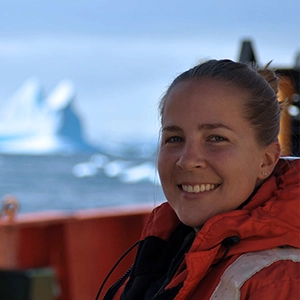
I am the Laboratory Manager for the Saba Laboratory, which is part of the Center for Ocean Observing Leadership (COOL). My broad research interests include the long-term impacts of climate change on marine ecosystems and the ocean’s role in the global carbon cycle, particularly at high latitudes. I am specifically interested in the biological component of the carbon cycle, such as the spatial and temporal variability of primary production, how primary productivity is influenced by top-down and bottom-up processes, and the role of zooplankton in biogeochemical cycling and sequestration of carbon. In addition to my biological oceanography research interests, I also enjoy developing software programs (using Python) for data maintenance and quality control.
Short History
I received my M.S. in Marine Science in 2012 from the College of William & Mary at the Virginia Institute of Marine Science. For my thesis research, I investigated the microzooplankton community structure and grazing impact along the Western Antarctic Peninsula as part of the Palmer Antarctica Long-Term Ecological Research (PAL LTER) project. I went on to work as a data analyst in the pharmaceutical industry for several years where I gained experience in database management and data visualization before returning to my passion for oceanography research as part of the Center for Ocean Observing Leadership (COOL). From 2015 – 2018, I was part of the Data Evaluation team at Rutgers for the Ocean Observatories Initiative (OOI) where we assisted with the testing, deployment, and maintenance of the OOI Cyberinfrastructure system for data delivery to public users. I am now involved in various projects for the COOL group, including data analysis and visualization for wind energy assessment projects; real-time and delayed-mode glider data processing, QA/QC, analysis and visualization; and field and laboratory work for zooplankton ecology projects.
Select Publications
Steinberg DK, Ruck KE, Gleiber MR, Garzio LM, Cope JS, Bernard KS, Stammerjohn SE, Schofield OM, Quetin LB, Ross RM. 2015. Long-term (1993 – 2013) changes in macrozooplankton off the Western Antarctic Peninsula. Deep-Sea Research Part I 101:54-70.
Garzio LM, Steinberg DK, Erickson M, and HW Ducklow. 2013. Microzooplankton grazing along the Western Antarctic Peninsula. Aquatic Microbial Ecology 70:215-232.
Garzio LM, and DK Steinberg. 2013. Microzooplankton community structure along the Western Antarctic Peninsula. Deep-Sea Research Part I 77:36-49.
Sailley SF, Ducklow HW, Moeller HV, Fraser W, Schofield OM, Steinberg DK, Garzio LM, and SC Doney. 2013. Carbon fluxes and pelagic ecosystem dynamics near two western Antarctic Peninsula Adélie penguin colonies: an inverse model approach. Marine Ecology Progress Series, 492: 253-272.
Director of Marine Operations, R/V Captain
Chip Haldeman
Research Interests
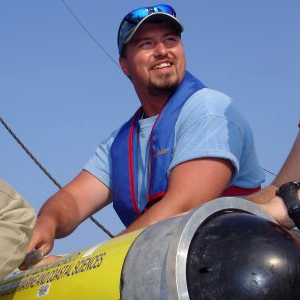
The physical aspects tend to pique my interest the most – waves, currents, tides, and the motion of the ocean. Specific interests include the physical coupling of the ocean and atmosphere, and the effects that the ocean has on weather. I’ve spent a large part of my career collecting and analyzing glider data in an attempt to provide more data for models to assimilate, hoping to significantly improve forecasting. I do, however, find smaller scale phenomena just as interesting – a tidal jet approaching an ideal laminar flow showing up in the ADCP data we’re collecting will have me as excited as a kid in a candy store.
Short History
Whether it’s work or play, the ocean is my forte. Growing up in NJ I spent a lot of time on the ocean, but going to school in New Mexico, I had a very limited view of what oceanography actually was. Attending Rutgers broadened my horizons significantly, and I joined COOL as an undergrad. Bringing with me a significant set of hands-on skills and seamanship, I filled a specific niche and was able to forge a path all my own that has blossomed into an incredible career. From building and designing moored instrumentation arrays, to CODAR technician, to glider pilot and technician, to scientific research diver, and now research vessel captain, it has all been very fulfilling. I am a Rutgers “lifer”, and I now enjoy imparting that knowledge to the next crop of scientists and technicians that come through RUCOOL.
Lead HF-Radar Operator
Ethan Handel
Downloads
Research Interests
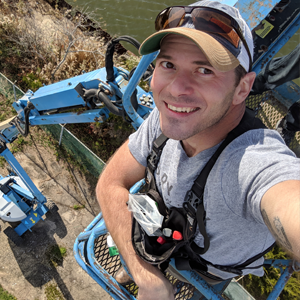
I am a research project coordinator with RUCOOL, and I primarily specialize in operational oceanography. Specifically, I have been working to support NOAA’s IOOS program as the lead HF-radar operator for the Mid-Atlantic region. I am responsible for the installations, operations, maintenance, and enhancement of 20 different coastal research stations. My time is divided between working on science and engineering data analysis, collection, and aggregation, from RUCOOL’s operations center at Rutgers University and conducting fieldwork at the shore. I help assist faculty, post-docs, grad students, and undergrads who need to work with the data collected by our HF-radar systems. This data is used to make near-real-time maps of the coastal ocean surface currents, which gets used to help improve the U.S Coast Guard’s Search and Rescue operations.
Short History
I graduated from Rutgers University in 2008 with a degree in Applied Ecology and Natural Resources Management. Having spent time as an undergraduate assisting the RUCOOL group in a variety of roles, I began working full-time with RUCOOL after completing my Bachelors program.
Marine Scientist
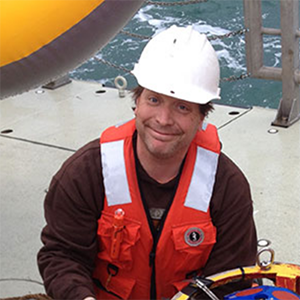
Eli Hunter
Research Interests
- Coastal and estuarine physical processes.
- Modeling of coastal ocean dynamics.
- Real-time data assimilation for ocean forecasting.
- Small scale turbulence measurements in the field and laboratory
- Lagrangian measurements and processes.
Short History
I earned a degree in Physics from Rensselaer Polytechnic Institute in 1992, after which I spent 5 years as a quality control chemist in the electronics gas industry. In the Fall of 1999, I returned to school at the College of Marine Studies at the University of Delaware. In the Spring of 2001, I was awarded an M.S. in Physical Ocean Science and engineering and was brought on at Rutgers University as a technician.
Research Programmer & UX Designer
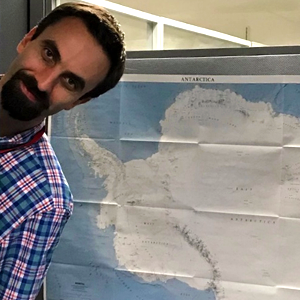
Sage Lichtenwalner
Short History
Sage is a research programmer and user experience (UX) designer with Rutgers University’s Center for Ocean Observing Leadership (RU COOL). His work focuses on developing interactive websites and data tools that support researchers, students, and faculty.
Since 2022, he has served as Information Manager for the Palmer Antarctica Long‑Term Ecological Research (LTER) program, where he oversees data archiving workflows, quality control, and metadata curation. He has been a Co‑PI on six NSF grants across four directorates, contributing to projects that support undergraduate use of ocean data (OOI Data Labs), promote polar literacy in informal learning environments (Polar Literacy), and develop tools to support Broader Impacts planning (ARIS Center). As Co‑PI of the new NSF‑funded EMBARK CyberTraining project, he leads the development of short‑format, hands‑on training for Early Career Ocean Professionals focused on reusing data from major facilities and repositories.
Over more than two decades, he has designed and developed a wide range of database‑driven web applications, data visualizations, and learning resources, including an early online community network for COSEE NOW, an internal review portal for the OOI Data Team, and real‑time ocean data processing from satellites, HF radar, and gliders. He holds a B.S. in Physics and an M.B.S. in User Experience Design from Rutgers University.
Laboratory Manager
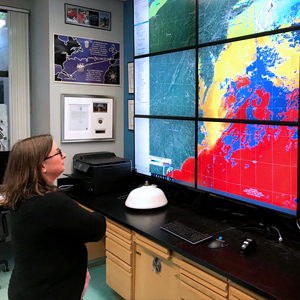
Laura Nazzaro
Downloads
Research Interests
Laura Nazzaro currently manages Dr. Kohut’s Dynamic Marine Ecology Lab. Under Dr. Kohut’s supervision, she earned her M.S. in Oceanography in 2011 with a thesis focused on modeling ecological interactions between regional fisheries datasets and the oceanographic datasets measured by RUCOOL. After completing her degree she has continued serving RUCOOL on a variety of projects, including many centered around ecological modeling, as well as in daily data operations. She is experienced in Python, MATLAB, R, and shell scripting and has played a key role in the development and maintenance of data processing, quality control, analysis and visualization for Slocum glider, HF radar, and satellite data collected by RUCOOL and its partners. In her role as lab manager, she continues many of these same duties, with particular focus on dynamic habitat modeling of a variety of animals from fishes to large marine mammals. As part of this role, she is also an additional support for RUCOOL students, especially those supervised by Dr. Kohut, and provides support for proposals, reports, publications, and presentations led or co-led by Dr. Kohut and other RUCOOL faculty. Her ecological research stresses the importance of strong collaboration, often involving a wide variety of collaborators from different universities and different disciplines as well as stakeholders ranging from the fishing industry to the wind industry. It also highlights the importance of research that can be directly applied to a dynamic ecosystem in ways that support the variety of stakeholders living and working in a highly dynamic region experiencing a growing number of ocean uses, and has been used to improve fisheries management and conservation of the critically endangered North Atlantic right whale.
Director of CODAR
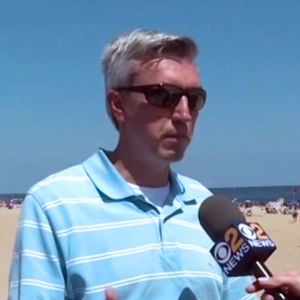
Hugh Roarty
Downloads
Research Interests
Hugh Roarty is a Research Project Manager at RUCOOL, with more than two decades of experience advancing coastal and ocean observing systems from research concepts to sustained operational capabilities. Trained as an ocean engineer, he has played a central role in the design, deployment, and operation of high-frequency (HF) radar networks, autonomous platforms, and in situ sensors supporting coastal oceanography, maritime safety, and national observing infrastructure. His work bridges engineering, applied science, and operations, with a sustained focus on translating observational data into actionable products for stakeholders including NOAA, the U.S. Coast Guard, and DARPA.
Over the course of his career, Dr. Roarty has won nearly $10M in research funding, authored or co-authored close to 100 peer-reviewed publications, and delivered more than 200 technical presentations. He is widely recognized for his leadership in HF radar science, including vessel detection, wave and current measurement, quality assurance/quality control, bistatic radar systems, and network resilience—work that has directly informed search and rescue operations, offshore wind planning, and coastal hazard response. In addition to his research contributions, he has held faculty appointments at Princeton, mentored students and early-career scientists, and helped shape best practices and standards for regional, national, and global ocean observing networks.
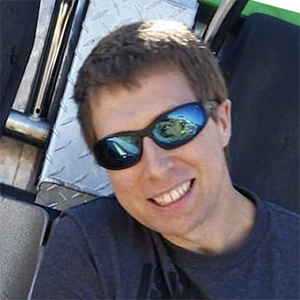
Research Programmer
David Robertson
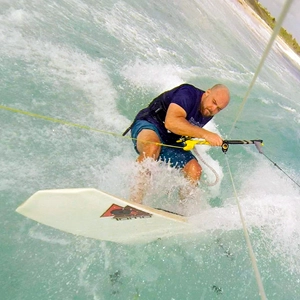
Data Analyst and Programmer
Mike Smith
Downloads
Research Interests
Michael Smith is a Research Analyst at RUCOOL, where he has worked since 2010. He holds a B.A. in Biological Sciences and a M.S. in Data Analytics. His work focuses on evaluating the performance of global and regional ocean circulation models by comparing model output to in situ observations, including high-frequency (HF) radar-derived surface currents and autonomous underwater glider profiles. These comparisons help improve the accuracy of operational ocean forecasts and hurricane prediction systems.
Michael manages the real-time quality control, processing, and visualization of surface current data collected by CODAR SeaSonde HF radar networks in the Mid-Atlantic, Gulf of Mexico, Caribbean, and Antarctic regions. He is the lead developer of HFRadarPy, an open-source Python toolbox that automates HF radar data validation and conversion to widely used formats such as NetCDF, MySQL, and LLUV. His work supports national and international efforts to advance integrated ocean observing systems.
In addition to his model evaluation and radar operations work, Michael contributed to the development of an algorithm for detecting vessels beyond the radar horizon using surface current patterns, a capability with applications in maritime safety and security. He also participated in the quality assessment of observing assets for the NSF-funded Ocean Observatories Initiative (OOI) Endurance Array. Across all his projects, Michael plays a central role in designing and maintaining robust, scalable data workflows that integrate observational oceanography with modern analytics and machine learning to support decision-making in both science and operations.
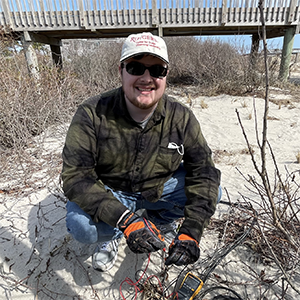
Laboratory Researcher
Timothy Stolarz
Short Bio:
Tim Stolarz is a Laboratory Researcher at RUCOOL, where he specializes in the integration of field-based hardware with advanced, software-driven data services. Over the past three years, he has played a pivotal role in advancing RUCOOL’s High-Frequency (HF) radar operations into a more modern, sustained digital infrastructure, bridging the gap between raw field observations and live, research-ready products. His expertise spans the full data lifecycle, from hardware calibration and troubleshooting to the architecture of automated pipelines for data ingest, quality control, and publication. He has led a meaningful step towards the modernization of legacy RUCOOL methods, converting internal MATLAB tools into documented Python packages available on GitHub. This initiative has not only streamlined internal research questions but has also enabled external institutions to adopt reproducible workflows and dynamic interfaces. He has designed and maintained over 13 live-service web applications and data viewers, managing complex ERDDAP datasets that integrate HF radar, wave, drifter, and fisheries observations.
His work directly supports the operational needs of the U.S. Coast Guard, NOAA, and MARACOOS, transforming complex oceanographic variables into dependable, stakeholder-ready tools. By prioritizing open code and user-oriented interfaces, Timothy has significantly lowered the barrier to entry for HF radar information, ensuring that high-level research remains accessible and actionable for the broader scientific community and maritime missions.
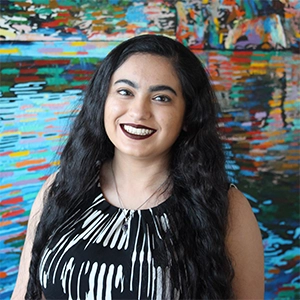
Research Project Coordinator
Mitaali Taskar
Short Bio:
Mitaali Taskar is a Research Project Assistant (Science Communicator) within Rutgers University’s Department of Marine and Coastal Sciences. She specializes in Science Communication and Education Outreach and supports the implementation of several outreach initiatives that engage a variety of audiences. These initiatives entail: (1) assisting a university school initiative and national center that supports academic communities in building their skills and capacity in communicating research impact (Rutgers University’s School of Environmental and Biological Sciences (SEBS) Office of Research’s “Charting Your Research Pathway” workshop series and the Center for Advancing Research Impact in Society (ARIS), respectively), (2) supporting post-secondary educators (e.g., community college, state universities/colleges, research institutions) as they create student-friendly online learning tools on analyzing real-time ocean data (Ocean Data Labs), and (3) connecting K-12 educators and students with Rutgers research through in-person and virtual events, both on-campus and off-campus (Rutgers 4-H STEM Ambassadors program, Palmer Long-Term Ecological Research (LTER) Video Teleconferences (VTCs), GEAR UP at Rutgers, Building a Climate Ready NJ’s educator program).
Her support includes, but is not limited to, event logistics; event facilitation; written and visual content for blogs, social media, and established publications; youth development; and in-person science outreach demonstrations.
She holds a M.S. in Science Communication from Laurentian University (supported by Science North) and a B.Sc. in Biology from McGill University. Her work is informed by her previous experiences in both informal and formal education spaces—as a science outreach volunteer for Let’s Talk Science and as an alternative U.S. high school science and math educator fellow (through Public Allies), respectively.
Laboratory Researcher
Nicole Waite
Downloads
Research Interests
Nicole Waite is an oceanographer and laboratory researcher with over a decade of experience in marine science, ocean observing technologies, and polar ecological research. She holds an M.S. in Oceanography from Rutgers University and a B.S. in Marine Biology with a minor in Chemistry from the University of New England. Her expertise spans marine technology, marine biogeochemistry, phytoplankton ecology, and coastal ecosystem dynamics, with extensive fieldwork across the Western Antarctic Peninsula, including multiple deployments with the U.S. Antarctic Program and international research cruises. Nicole’s technical strengths include managing oceanographic laboratories, leading field teams, and serving as a senior Slocum glider technician, pilot, and instructor. She has contributed to long‑term ecological research, cutting‑edge autonomous ocean technology development, and interdisciplinary studies on climate‑driven changes in polar marine systems. Nicole has extensive experience with oceanographic instrumentation, including CTDs, rosettes, Niskin bottles, and bio-optical profiling instruments. She also has extensive laboratory experience with a wide variety of instrumentation and techniques, including High Performance Liquid Chromatography, fluorometry, and Imaging Flow Cytometry.
Nicole has served at the RUCOOL since 2015, where she currently manages the Schofield Lab, coordinates oceanographic instrumentation, leads and plans field operations locally and remotely, and supports scientific collaborations, data management and analysis, and publication efforts. Her work has resulted in numerous peer‑reviewed publications and conference presentations, particularly in phytoplankton community dynamics and advancements in autonomous observing platforms. She is also involved in teaching, mentoring, and outreach, including glider training workshops, undergraduate and graduate class assistance, and K–12 STEM engagement. Nicole’s broad scientific background, leadership in field research, and commitment to workforce development position her as a versatile and highly skilled contributor to ocean observing and marine ecosystem research.