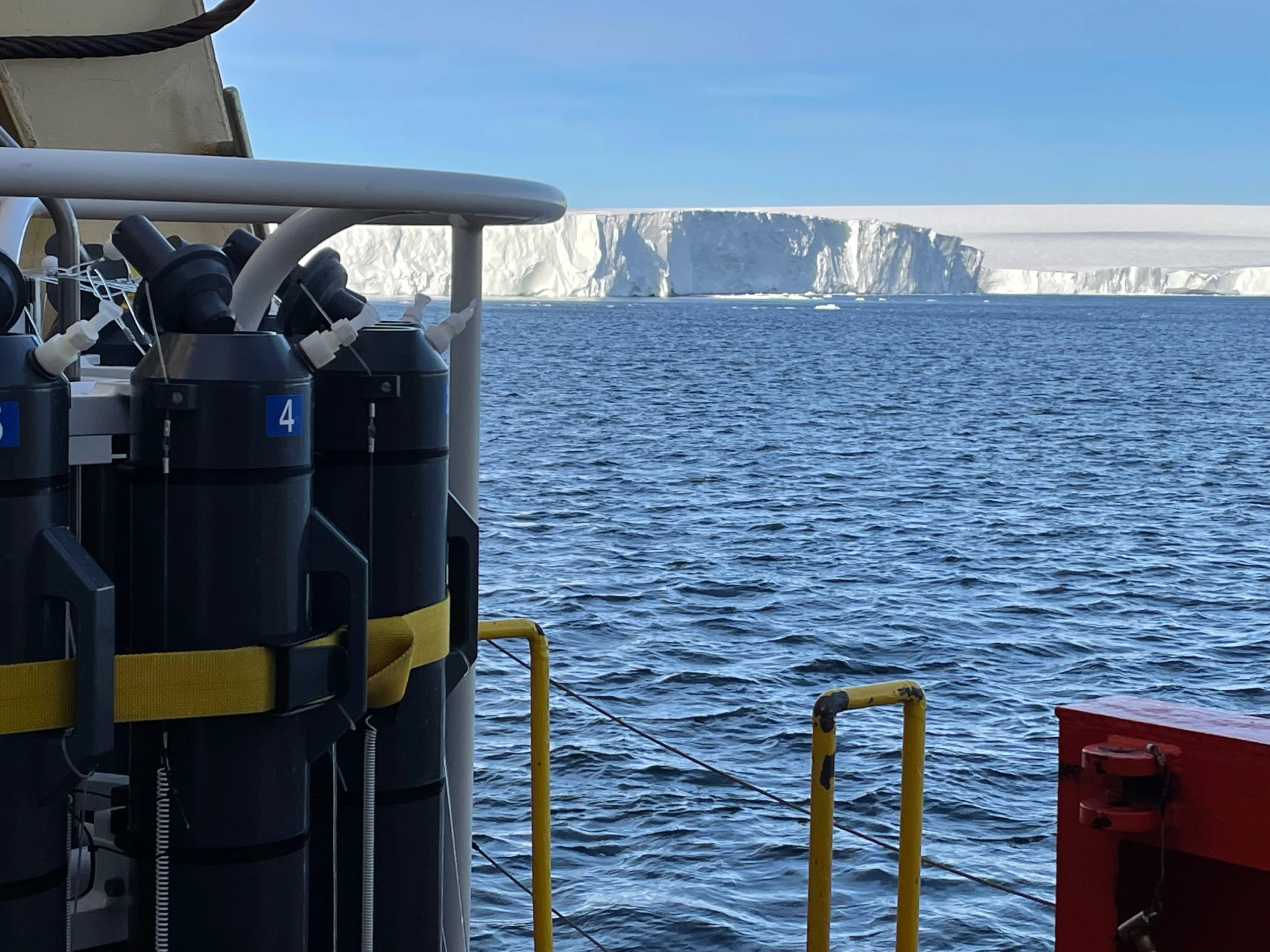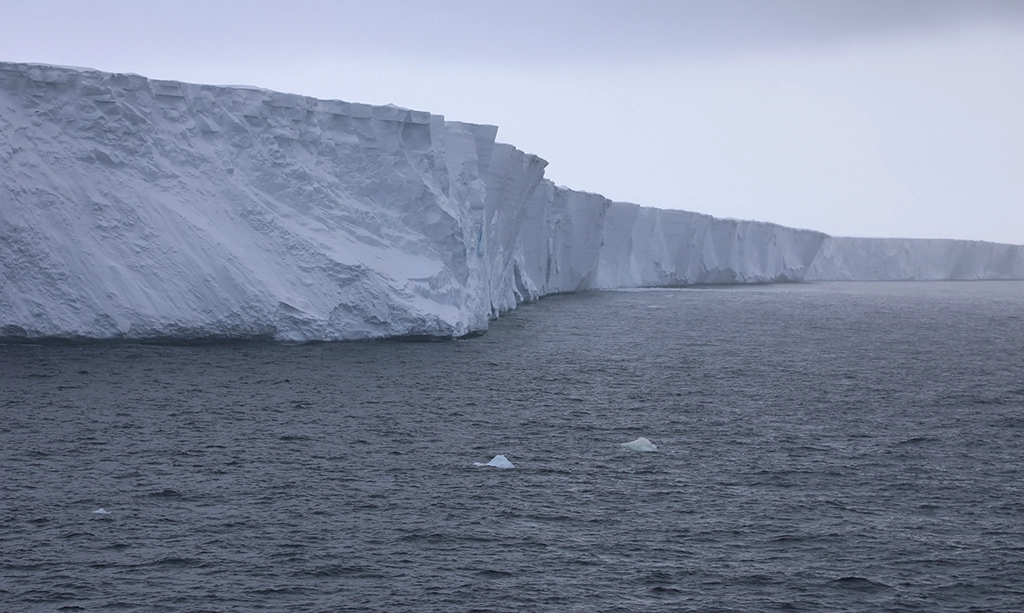
The biological productivity of the Southern Ocean is limited by the availability of iron, a critical micronutrient for phytoplankton. However, in the ocean waters overlying the Antarctic continental shelf, productivity is much higher. The most productive regions are in the Amundsen Sea, West Antarctica, the site of our research, where a rich summertime ecosystem supports penguins, seals, and whales. In the Amundsen Sea, glacial meltwater comes from underneath floating ice shelves (the seaward extensions of grounded glaciers on the continent), because the melting is caused by warm deep water that flows from the Southern Ocean proper, onto the continental shelf, then into the cavities under the fringing ice shelves. It has been widely assumed in recent numerical models that glacial meltwater contributes substantial bioavailable iron to these shelf waters. Our work counters previous thinking in showing that most of the iron flowing out of an Amundsen Sea ice shelf cavity was present already in the warm water flowing into the cavity; very little additional iron comes from meltwater.
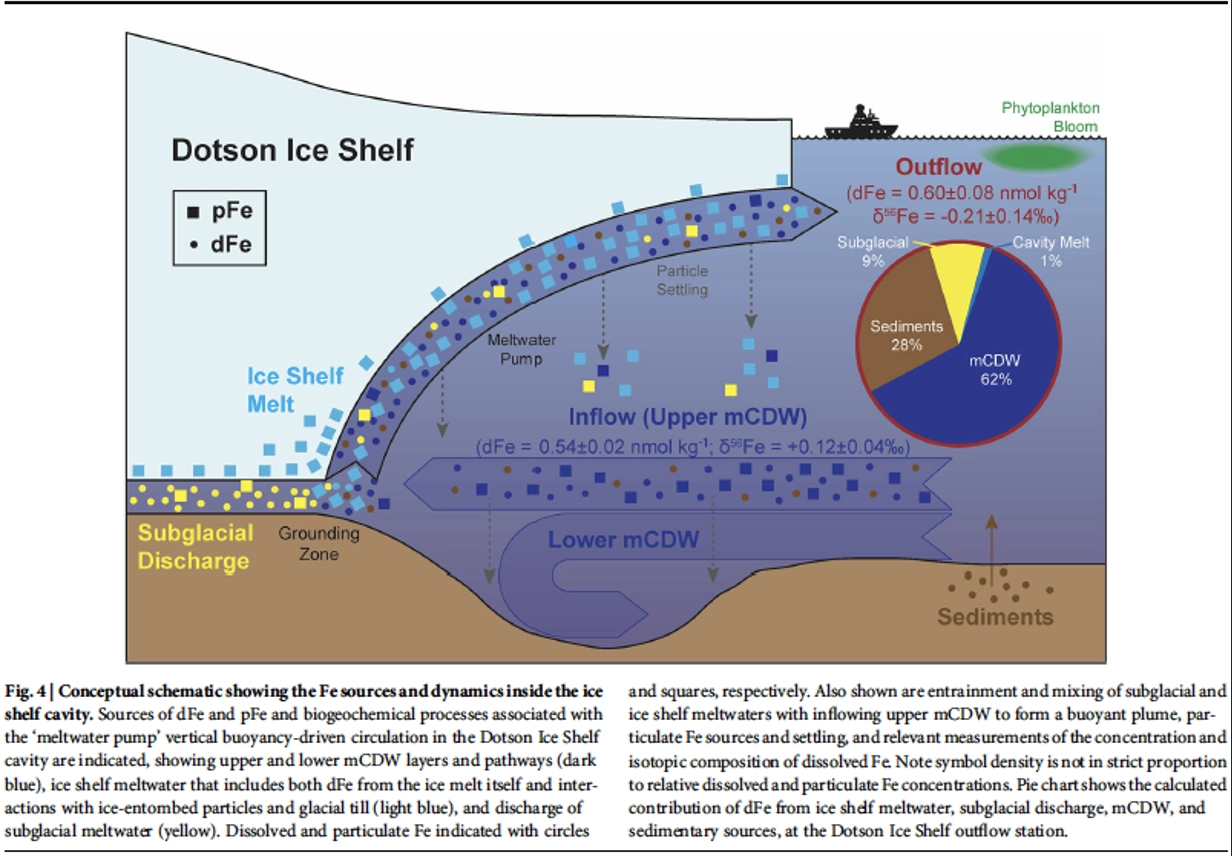
We measured iron and its isotopic “fingerprint” at the primary inflow and outflow locations along the front of the Dotson Ice Shelf, and carefully calculated how much more Fe is coming out, than flowed in. Our results indicate that melting from the underside of the ice shelf contributes very little dissolved iron. Further, the iron isotope ratios strongly suggest that somewhere within the poorly-studied system of subglacial liquid water that underlies the continental ice sheet upstream of the Dotson, there exists a meltwater layer that lacks dissolved oxygen, setting up conditions for the dissolution of Fe oxides in the bedrock, and releasing very high concentrations of isotopically distinct Fe2+, discharging into the cavity at the grounding line, and showing up in our samples of the water flowing out of the cavity. Subglacial discharge is a tiny contribution to total meltwater volume, but supplies most of the meltwater-derived dissolved iron. Even with the subglacial contribution, however, about 90% of the dissolved iron coming out from the ice shelf cavity to fertilize the phytoplankton comes from deep waters and sediments outside the cavity, not from meltwater. A further twist is that particulate Fe is very enriched in the outflow, and some of this may become soluble over time, potentially playing a role in fertilizing the phytoplankton blooms. These discoveries will likely change predictions connecting the rate of glacial melting to the future productivity of the ocean ecosystem near the Antarctic continent.
This idea is summarized in the schematic diagram below, of the buoyant plume formed when the warm deep water mixes with glacial meltwater. The pie diagram on the right shows the relative magnitude of the sources of dissolved Fe exiting the ice shelf cavity and flowing toward the large phytoplankton blooms found every summer in the continental shelf waters.
Full article here