
Science That Serves Ocean research with real-world results
At Rutgers Marine Sciences, we confront environmental challenges from all directions to help protect people and the planet.
The ocean is changing, and with it, the systems that support life. Warming waters are reshaping ecosystems and fueling more frequent and severe storms. At the same time, pressure is growing to turn to the ocean for food, as land-based systems struggle to meet global demand. At Rutgers Department of Marine and Coastal Sciences (DMCS), researchers are confronting these changes head-on.
From its founding, DMCS has been rooted in the idea that science should serve the public good. Its first director embedded broader impacts into the department’s mission—a principle that has become even more critical as climate pressures intensify. Today, DMCS scientists are focused on helping ecosystems, industries, and communities adapt.
At a time when federal research funding is under strain and the need for practical, impactful science has never been greater, DMCS researchers are turning discovery into action. The vignettes that follow highlight three Rutgers scientists whose work reflects the department’s core mission: to use science to understand the ocean and sustain life.
One researcher is working to unlock the power of marine microbes to clean up pollution. Another is developing climate-resilient shellfish to support sustainable ocean farming. And the third leads research in ocean data, tracking hurricanes and other extreme weather to give coastal communities time to prepare.
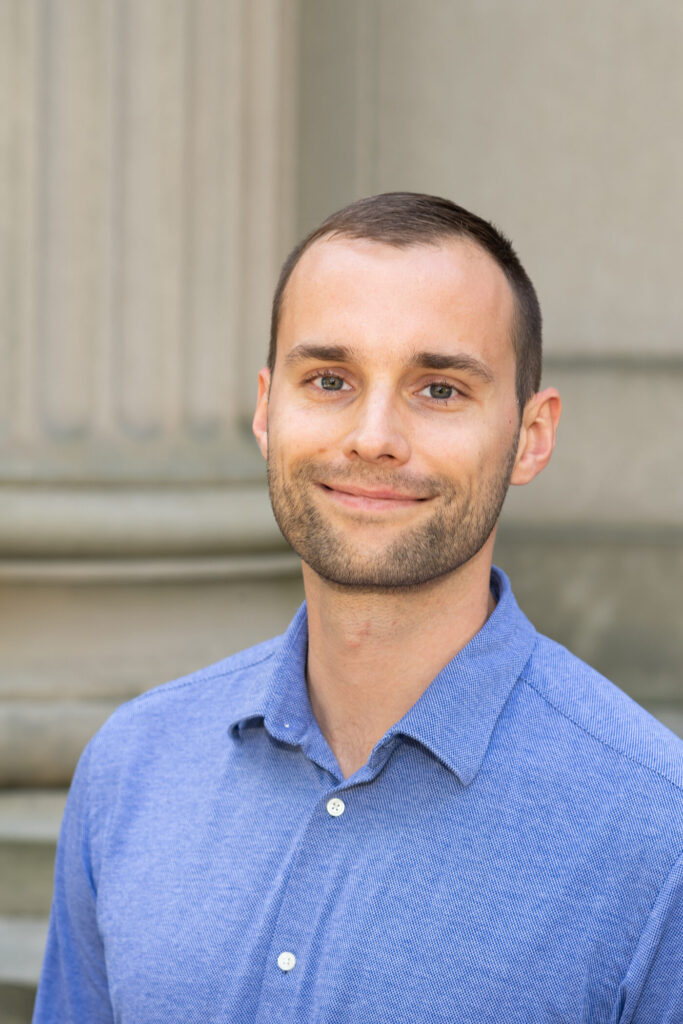
Mining the Marine Microverse
There are more microbes on the Earth than stars in the sky, and the single-cell organisms kept the planet livable for billions of years, Assistant Professor Benedict Borer said. Borer is researching the enormous and largely uncharted world of marine microbes to determine how they can be harnessed to clean pollutants and make the planet healthier.
“We’re absolutely not using the potential of microbes,” said Borer, noting scientists have only been able to grow 1% of all known microbial species in the lab. “If we really learn how to use microorganisms to their best potential, that is a massive step forward because they can do so many things that we cannot, at scales that we can’t.”
Microbes already are used at wastewater treatment plants to render sewage safe, and to clean up gas spills. Scientists have identified a species able to degrade plastics, but it has yet to be developed for use at scale, he explained.
As an engineer turned microbe oceanographer, Borer studies microorganisms in the ocean to determine what they can do and what environmental factors they require to survive. He uses microfluidics, or lab-on-a-chip technology, to simulate environmental conditions and observe microbial behavior on a tiny scale. Many microbes live in dense communities. Biofilms, clusters of microorganisms that live together and can perform very specific functions, “are essentially the megacities of the microverse,” he said.
Marine microbes, shaped by the demands of attaching to and detaching from sinking particles, may be particularly suited to propagate deeply in soil that is contaminated. “That is something only evolution teaches you,” he said.
Borer is trying to improve the reputation of microbes, often thought of negatively by the public even though less than 1% are dangerous to humans. He’s tying that into his teaching at Rutgers and plans to create a curriculum for middle schoolers.
“There needs to be an understanding that microbes are everywhere, and they have a tremendous impact,” he said. They “act on our everyday life and on every single ecosystem on this planet.”
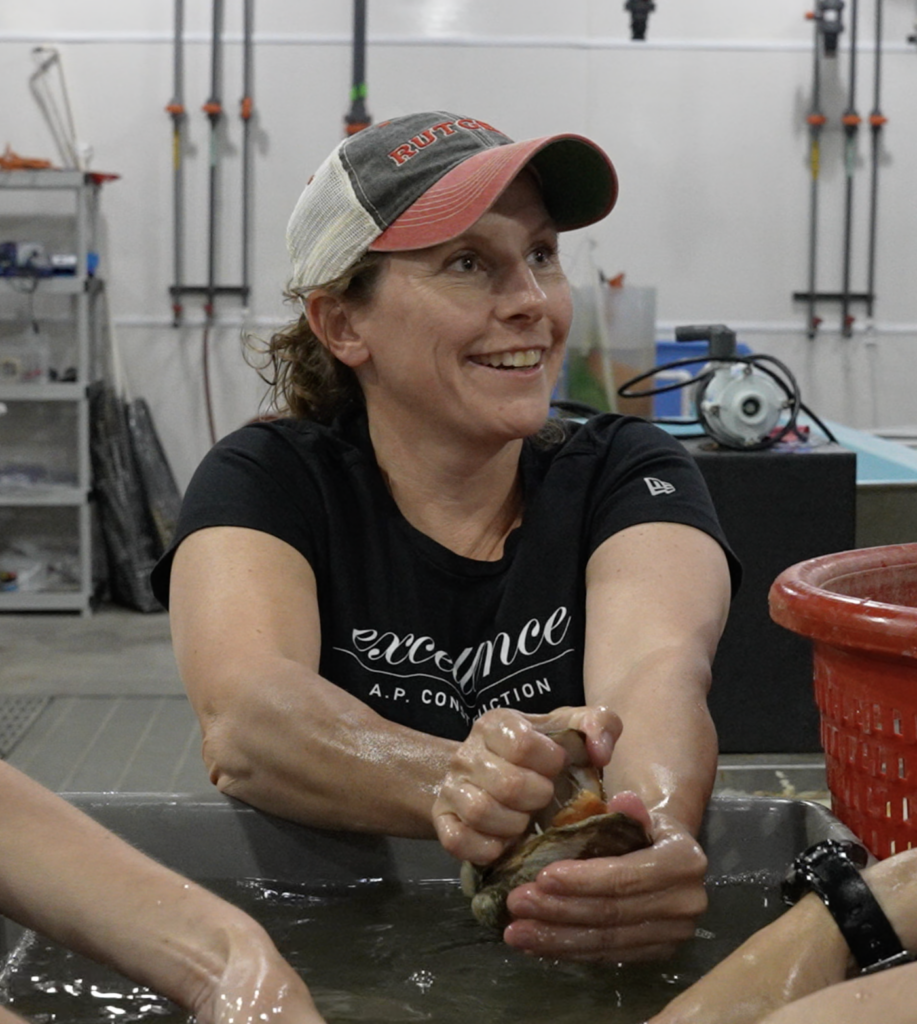
Adapting Shellfish Farming for Climate Resilience
With land-based food systems under strain, attention is turning to the ocean—and Associate Professor Daphne Munroe is working to ensure this new frontier of farming supports both people and the planet.
Munroe, an ecologist, studies how shellfish aquaculture can provide food, clean the water, and strengthen coastal ecosystems. She primarily studies clams, oysters and scallops, filter feeders that help clean the water. They also serve as habitat for other animals in the ocean and offer shoreline protection, Munroe said. “You get ecological kickbacks just by farming them.”
Unlike other forms of seafood production, shellfish farming has a light footprint. It supports small-scale, local producers and avoids the long-distance shipping and environmental degradation associated with many imported fish. “Farmed shellfish is one of the few kinds of seafood that tends to stay local,” she said.
But rising ocean temperatures and shifting habitats threaten wild shellfish populations and the farmers who rely on them. In 2021, Munroe heard from a fisherman with surprising news: decades after surfclams had disappeared from the coastal shelf off Virginia, they resurged.
“The fishermen found lots of clams. Lots!” she said. While the clams were smaller than the prior ones, the overall biomass of clam meat was substantial.
Genetic analysis revealed signs of hybridization, suggesting the clams may have adapted to climate change by mixing with a more heat-tolerant species.
In collaboration with Marine Aquaculture Extension Specialist Dr. Michael Acquafredda, Munroe’s lab at Rutgers Haskin Shellfish Research Laboratory in Cumberland County is producing the hybrids in controlled settings to test their resilience to warming waters and other stressors. If successful, these hardier shellfish could become seed for farms.
Maintaining relationships with fishermen and farmers is an important aspect of her research. “You’ve got to listen to the people who are on the water and making a living doing this work,” Munroe said. “They know the ecology better than any scientist ever could, because they’re doing it every day.”
Her research serves a dual purpose: helping shellfish farmers remain viable while making ocean farming a more sustainable part of the global food system. Globally, “we have too many humans to feed. We need to go to the ocean to produce food,” Munroe said.
At the heart of her work is a pressing question: “How do we produce the most food with the lightest footprint?”

Turning Ocean Data Into Storm Protection
When Hurricane Irene hit in 2011, Rutgers Department of Marine and Coastal Sciences by chance had an autonomous underwater glider in its path that collected key ocean data. Fourteen months later, with Hurricane Sandy a week from reaching the East Coast, a Rutgers doctoral candidate in oceanography proposed putting a glider in front of it.
“The night before it made landfall, I was watching the data in real time coming in from the glider,” said Travis Miles, now a tenured associate professor. “I knew it wasn’t going to weaken significantly and was going to be a strong storm, just from the oceanographic data that we were looking at.”
The problem was DMCS could not relay that vital data to the National Weather Service or the National Oceanic Atmospheric Administration. “We had no way to communicate what we’re seeing in the ocean and its connection to hurricane intensity,” Miles said. “There was not a strong communication pipeline to share that information and have it help forecasters.”
Miles and his advisors set out to fix that. He switched his doctoral thesis from climate change in Antarctica to coastal storm monitoring to improve forecasting models.
The temperature of a water mass and percentage of salt it holds at different depths helps predict whether a storm will strengthen or weaken because “basically, the ocean is the heat engine for a hurricane,” Miles said.
Analysis of the glider data from Hurricane Irene and Superstorm Sandy showed that the operational models used for forecasting were woefully off, especially for the Mid-Atlantic region. “Those models have been upgraded significantly,” he said.
Today, DMCS works with partners across the country to deploy about 50 gliders throughout the annual hurricane season, feeding ocean data to the NWS and NOAA from storm-prone regions. Ocean data has in some cases improved a storm’s forecast by a full category, he noted.
When hurricanes approach, especially those predicted to hit the tristate area, Miles is called upon by media outlets to explain the contributions of DMCS’s work with gliders. He’s found that engaging people about his hurricane research is far easier than sparking interest in his climate change research in the Antarctic had been.
“It’s really telling how many people have been impacted by storms, or know someone who has,” Miles said. They had emotional experiences, emotional responses, and it made it easy to engage and then share kind of what we’re doing around it.”
Written by Margaret McHugh. Edited by Mitaali Taskar and Janice McDonnell. This article is part of Stories of our Science Impact, showcasing how Rutgers researchers advance their Broader Impacts mission by addressing real-world challenges through science.